
Living sand: Biopolymers for better soil
Dübendorf, 20.08.2026 — Desert sand is not suited for agriculture – but perhaps that might change. Researchers at Empa and Khalifa University in Abu Dhabi have investigated a first step in this direction by introducing microorganisms into the sand. The bacteria and fungi secrete biopolymers that make sand more resistant to erosion and slow down the rate at which water seeps through. This could potentially enable the growth of further microorganisms and plants.
Excessive land use, deforestation, and climate change are leading to increased desertification in many regions of the world. Once started, the process often triggers a chain reaction: The loss of nutrients in the soil causes vegetation to become increasingly sparse, which exposes the soil to erosion by wind and water.
Turning desert back into fertile soil requires enormous resources – especially water, which is a precious commodity in desert regions. Researchers at Empa and Khalifa University of Science and Technology in Abu Dhabi have now investigated a novel first step that could enable further soil improvement in sandy deserts: They have breathed life into the sand.
Sand is a particularly challenging substrate for agriculture. It contains no organic nutrients that could sustain microorganisms or plants. Sand grains do not stick together, which makes sandy soils particularly susceptible to erosion. And sand allows water to seep through quickly, resulting in a very high demand for irrigation.
Researchers from Empa's Cellulose and Wood Materials laboratory, together with their colleagues in Abu Dhabi, tackled all these challenges at once. They added specific bacteria and fungi to the sand, which form structured networks across sand grains, giving them more cohesion. Their results were published in the journal “Carbohydrate Polymers.”
A natural binding agent
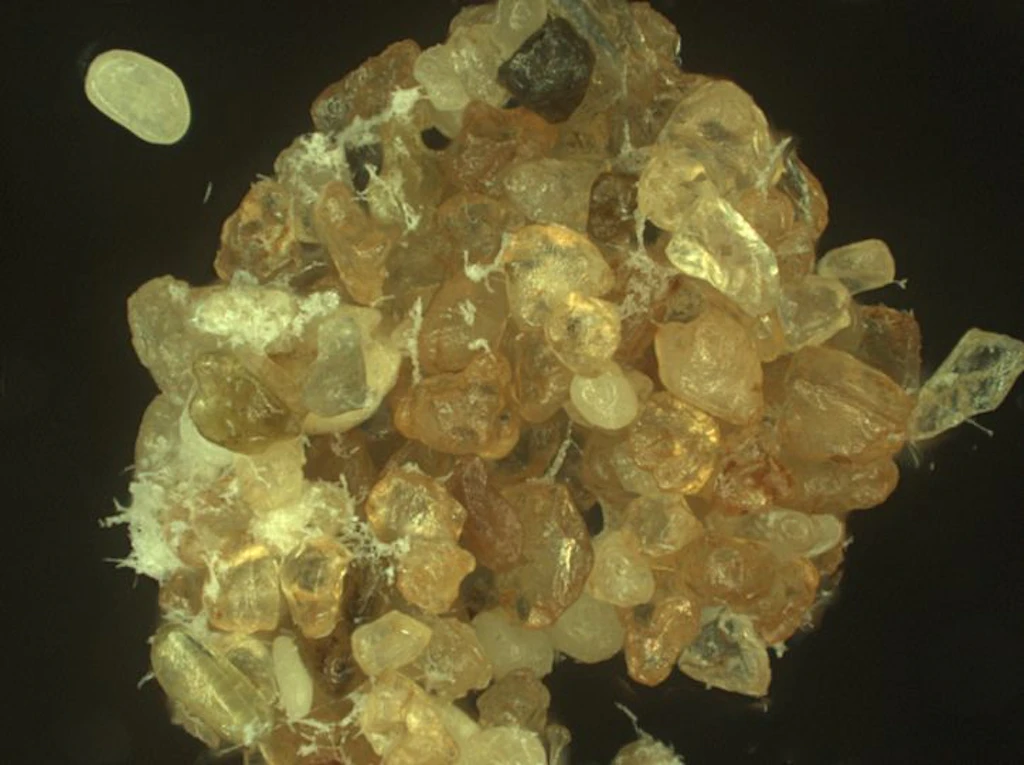
The basis of these microbial networks is formed by so-called biopolymers: natural molecules consisting of long chains – similar to plastics. The microorganisms form long biopolymers into fibers that permeate the sand. “This creates a kind of natural composite material,” says Gustav Nyström, head of the Cellulose and Wood Materials laboratory and co-author of the study.
To test their approach, the researchers incubated sand samples from Abu Dhabi with different microorganisms in a nutrient solution and then checked their mechanical strength and water permeability. The result: The samples mixed with bacteria in particular were significantly more robust than pure sand and slowed water permeation up to six times.
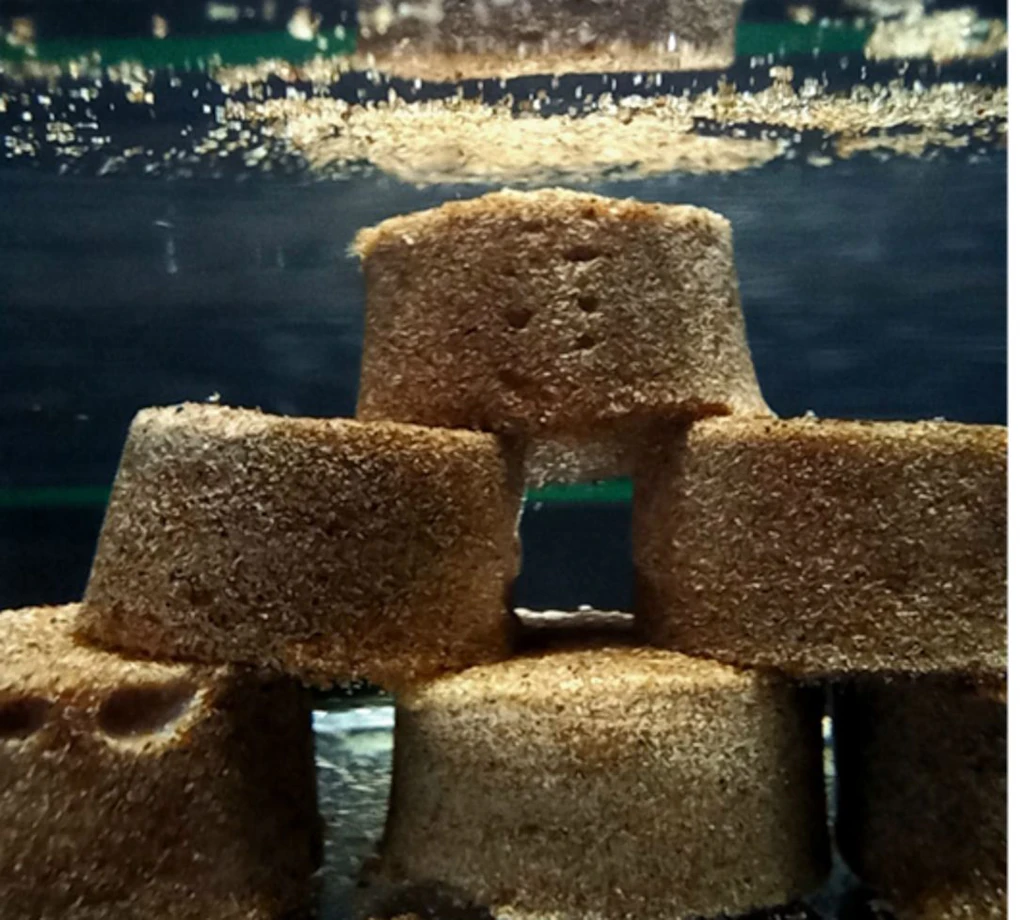
In addition to the experiments in which the microbes did their work directly within the sand samples, the researchers pursued a second approach. Here, they used the microorganisms – specifically, bacteria that secrete nanocellulose – to make so-called geotextiles. In the laboratory, the bacteria produced mats of cellulose, which the researchers then combined with the sand to form layered structures. This more labor-intensive process yielded the best results in terms of stability and water permeability. The latter was slowed down by a factor of 28 in the layered samples.
A starting point for growth
Even with the addition of the biopolymers, sand is not overly stable – but it doesn't need to be. “This approach allows us to introduce organic matter and water into the sand and stabilize it somewhat,” says Nyström. “Ideally, this will then enable the growth of further microorganisms and plants, thereby initiating the process of making the soil more resilient and fertile.” Blaise Tardy, professor at Khalifa University and co-author of the work, adds: “The deployment of these microorganisms is not science fiction: The desert is there, and the nutrients are readily available in the United Arab Emirates, for instance sugars from food waste and complex nutrients in green municipal wastes.”
The sand experiments in the laboratory were only the first step, the researchers caution. The next step is to use the biopolymers in controlled field studies or greenhouses to see what effect they have on plant growth and how great the potential of the technology is for agriculture. Empa's materials scientists are leaving this task to other researchers from corresponding fields.
Literature
SM Vakeri, A Sinha, LG Greca, MH Salim, G Mabrook, Z Ziyan, MHA Dali, FA AlMarzooqi, S Mettu, G Nyström, BL Tardy: Living sand: Microbial nanocellulose and chitin-rich mycelia enhance granular material properties; Carbohydrate Polymers (2025); doi: 10.1016/j.carbpol.2025.124361
Informations
Dr. Gustav Nyström
Empa, Cellulose & Wood Materials
Phone +41 58 765 45 83
gustav.nystroem@empa.ch
Prof. Dr. Blaise Tardy
Khalifa University of Science and Technology
Phone +971 2 810 3619
blaise.tardy@ku.ac.ae