
Gender equality and women's empowerment
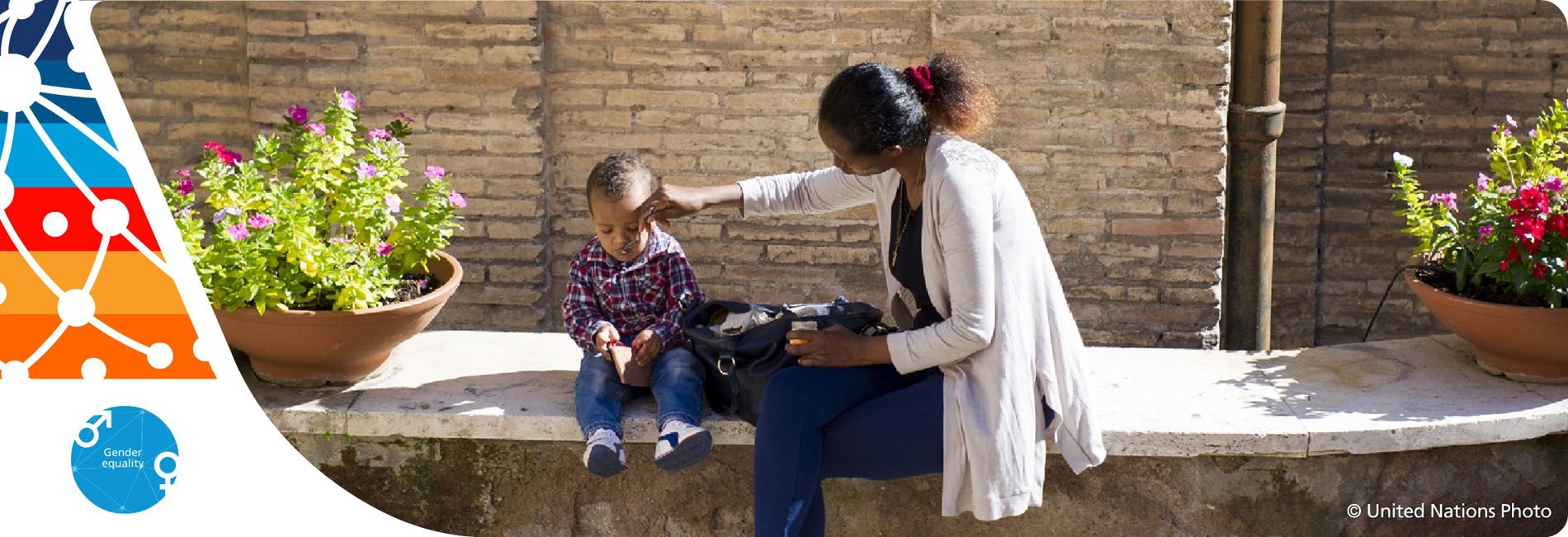
Since the first United Nations conference on women in 1975 in Mexico and several decades of efforts to eliminate all forms of discrimination of women and girls and achieve gender equality, considerable progress has been made. But gender disparities still remain in many areas, even in rich countries. The world is not on track to achieve gender equality by 2030.
Women and girls remain disproportionately affected by crises, as the COVID-19 pandemic has shown yet again, struggling with lost jobs and livelihoods, derailed education, increased burdens of unpaid care work and domestic violence. The most persistent and shocking gaps include pervasive prevalence of gender-based violence, persisting discriminatory laws, unequal access to economic opportunities and gender segregation in economic activity, gender pay gaps, gender inequalities in the responsibilities for unpaid household and care work, , the underrepresentation of women in the upper echelons of politics and management, women’s exclusion from decision-making on household, community, society and global levels, the gender imbalance in the allocation of public funds and the insufficient funding for measures and services needed to advance gender equality and the empowerment of women.
The member states of the United Nations, including Switzerland, have made multiple commitments to achieve gender equality and the empowerment of women through the Convention on the Elimination of All Forms of Discrimination against Women (CEDAW) , to which 185 countries subscribed; the 1995 Beijing Declaration and Platform for Action (PFA) ; the UN Security Council Resolution 1325 on Women, Peace and Security and follow-up resolutions; and the Sustainable Development Goals and their twin track approach with a standalone Goal 5 on Gender Equality and mainstreamed gender targets in other Goals.
Gender equality is also central to the World Bank Group’s goals of ending extreme poverty and boosting shared prosperity. Promoting gender equality is smart development policy. The Bank’s current gender strategy recognizes that stronger and better-resourced efforts are needed to address gender inequalities in access to jobs as well as control over and ownership of productive assets. Jobs and assets are key levers of change for women, their communities, and economies and fundamental drivers of economic growth and poverty reduction. Achieving results also entails closing the remaining gender gaps in health and education and enhancing women’s voice and agency – the ability to be heard and to make choices about their own lives.
Focus and Contribution from the SDC UN & MDB Section
- Support multilateral organisations such as UN Women, UNDP, UNFPA, UNICEF and the World Bank with substantial core contributions and as a member of the governing bodies of these organisations advocate for active gender equality policies and promote their implementation and monitoring.
- Specifically support UN Women in its mandate to achieve gender equality and the empowerment of women and to support other UN entities to mainstream gender equality in their policies and programmes.
- Specifically support UN Women in its mandate to achieve gender equality and the empowerment of women and to support other UN entities to mainstream gender equality in their policies and programmes.
- Support gender mainstreaming across the UN system. As an example, SDC has contributed significantly to the establishment of an instrument that promotes gender equality in all UN organisations and activities, the UN system-wide Action Plan on Gender Equality and the Empowerment of Women (UN SWAP). This is now used by 96% of UN organisations for annual reporting of corresponding progress.
- Contribute to strengthening the UN coordination on gender equality and women’s empowerment in general and on specific themes such as women’s political participation, economic empowerment and violence against women and girls in particular.
- With its contributions, Switzerland also advocates for UN funds to set quotas for gender-specific projects. For example, the UN COVID-19 Response and Recovery Fund has a 30% quota for targeted gender projects. Or the Peace Building Fund, which has a 25% quota for targeted gender and youth projects and usually exceeds it.
- Contribute to strengthening the institutional cooperation between members of the World Bank group and relevant UN organizations such as UN Women to advance gender equality and the empowerment of women.
- Support the World Bank in updating and implementing its Gender Strategy, including through support to the Bank’s Umbrella Facility on Gender Equality (UFGE).
For more information, please consult the website
UN System-wide Action Plan on Gender Equality and the Empowerment of Women (UN SWAP)
and the following documents:
Guidelines for Gender Mainstreaming Categories of ADB Projects
Asian Development Bank
World Bank Group Gender Strategy 2016-2023
Gender equality, poverty reduction and inclusive growth
World Bank Group: Update of Gender Strategy 2024-2030
Accelerate gender equality for a sustainable, resilient and inclusive future
Barbara Jäggi Hasler is in charge of gender equality and women's empowerment within the UN and MDB Section of SDC.
SDG 5 Website
The Sustainable Development Goals (SDG) 5
CEDAW Website
The Committee on the Elimination of Discrimination against Women (CEDAW)
Beijing PFA Website
The 1995 Beijing Declaration and Platform for Action (PFA)